From conquest to research
Columbus sailed westwards to conquer, Vasco da Gama had the canons talk for trade and Cook mapped the oceans on behalf of the Empire. Darwin's journey with Beagle became the beginning of a scientific revolution - but did so under the admiralty flag. Here conquering and weapons weren't central, but science, mapping and cultural meeting. Nordenskiöld's journey with Vega marked the beginning of a new chapter. His journey through the Norteast-passage became not only a geografical triumph - it was a journey to understanding as well.
The classical expeditions
• Columbus (1492) – financed by the Spanish Crown. The goal was to find a new seaway to Asia but was the start of colonalization and exploitation of "The New World". Goal: economic and imperial.
• Vasco da Gama (1497–99) – Portugal's way to India. Cannons and weapons were used to establish trade under force. Goal: commercial and military.
• James Cook (1768–71, Endeavour) – the mission of the admiralty to map and conquer new land. Scientific elements (astronomy, botany with Banks), but basicly building of the Empire.
• Charles Darwin (1831–36, Beagle) – oficially the mission of the admiralty to map the Coast of South-America. Science was a by-product, but reached enormous significance through Darwin's own studies.
Nordenskiöld's polar expeditions during 25 years:
Nordenskiöld took part in 10 swedish scientific polar expeditions during the later half of 19th century. He was the leader of all except for the first two whose leader was the zoology and geology professor of Lund's University, Otto Torell.
The first expeditions 1858 - 1873 headed to Spetsbergen and Greenland with different purpouses:
• Learning to know teh nature of Spetsbergen, topografy and to look for crop, mineral and fossil. In Greenland to find out the presense of inner forested valleys and traces of presence of elder civilizations (1883).
• Preparations for future degree measurement. To push forward as far north as possible, and scientific research. 81 degrees 42 minutes was reached.
An idealized depitcion By Jean Leon Gerome Ferris The First Thanksgiving
Nordenskiöld's Vega-expedition (1878–80)
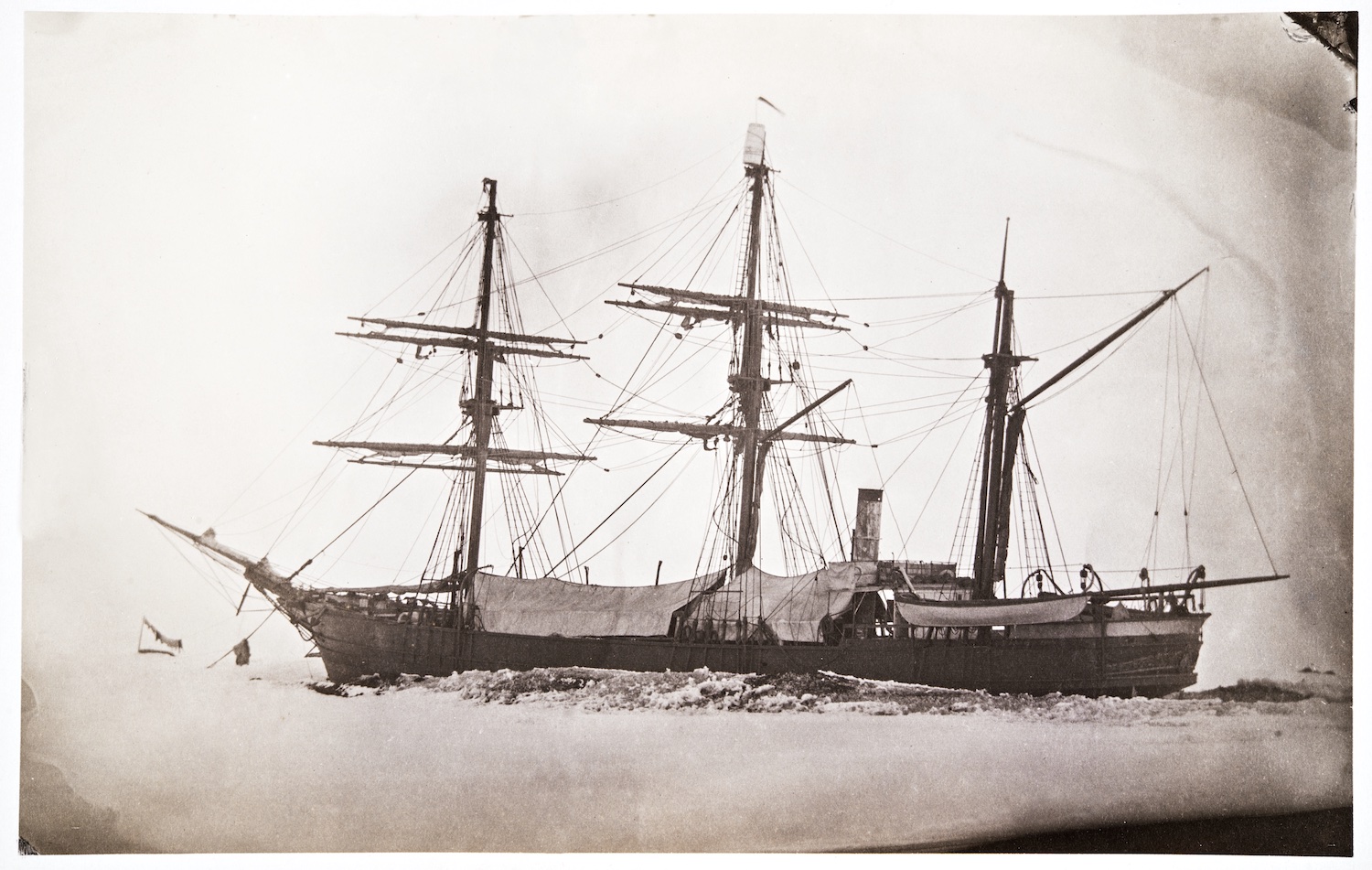
Wintering in Sibiria
In the years 1875 -1880 focus was switched to accessability eastwards, and possible trades. After
a couple of reconnoissance journeys to the outlets of the Jenisej River, the great brakethrough came : The barque Vega's journey through the Northeast-passage.
• Financing: not of a Crown or an Admiralty, but a combination of private capital (by russian merchant Sibiriakov), scientific institutions and support from the state of Sweden.
• Goal: to open th Notheast-passage – yes, an economic dimension (the Seaway to Asia) was absolutely present. But the expeditionen was all the same strongly characterized by scientific goals:cartography, geology, ethnography, biology.
• Character: one could argue for a journey marking a new kind of expeditoin: not conquering or mission, but scientific exploring and cultural meeting.
• Result: beside the geografical deed Nordenskiöld gathered huge amounts of scientific and cultural items.
• Vega's journey lifted Sweden/Finland upon the internatial arena, in more peacful and civilized circumstansies, the Great Power Era was over, Nobel and wellfare state were to be.
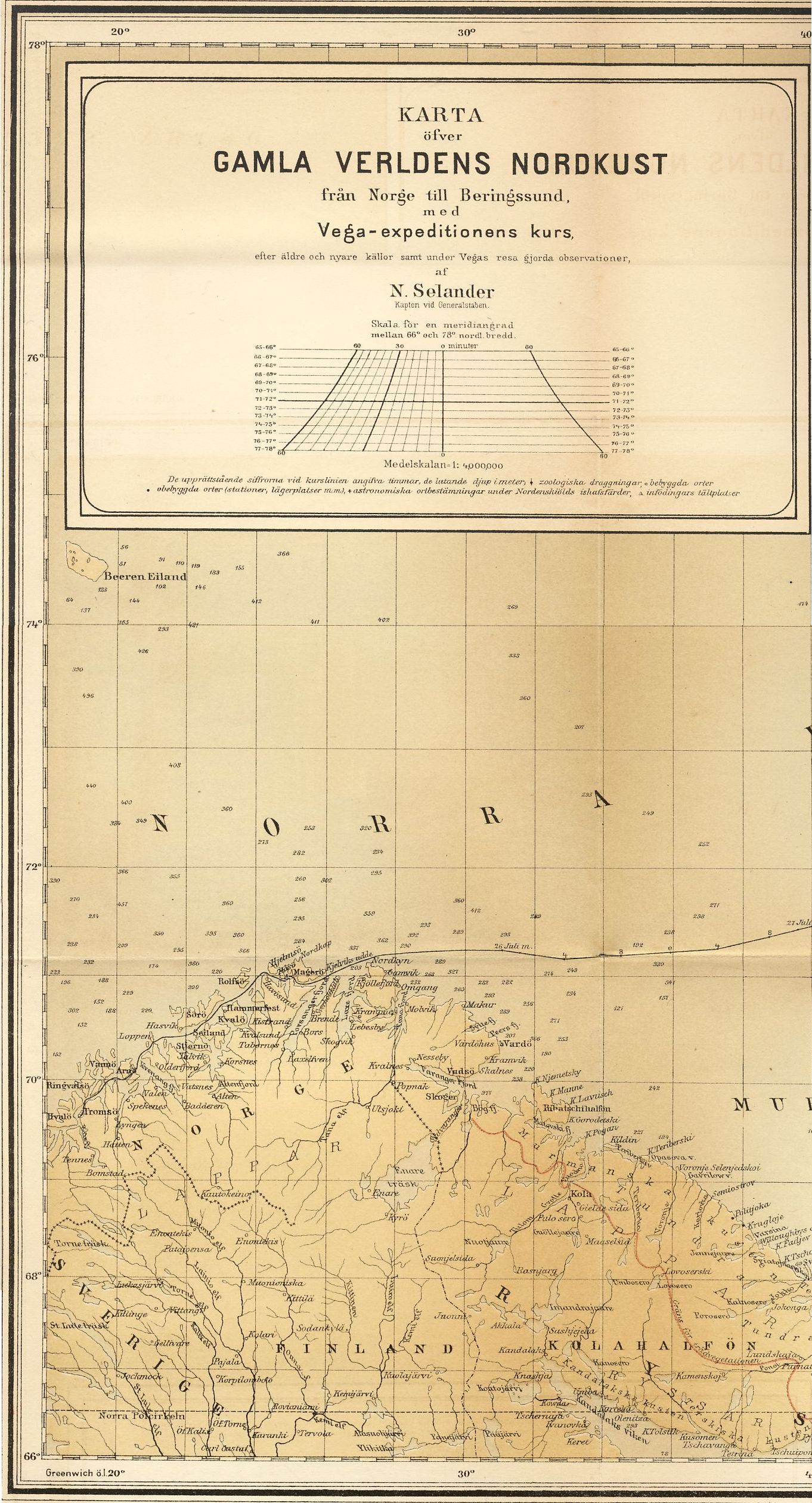
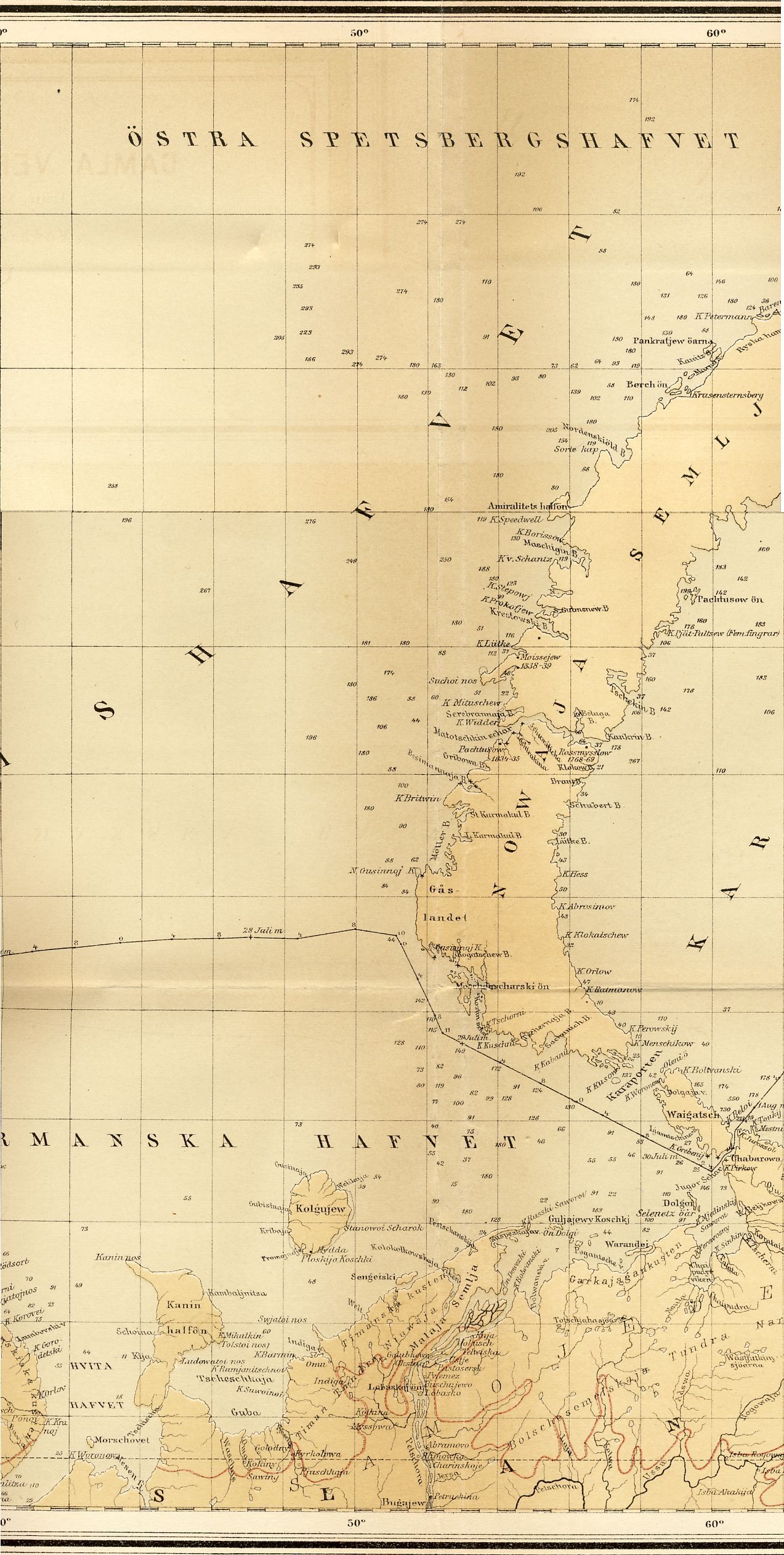
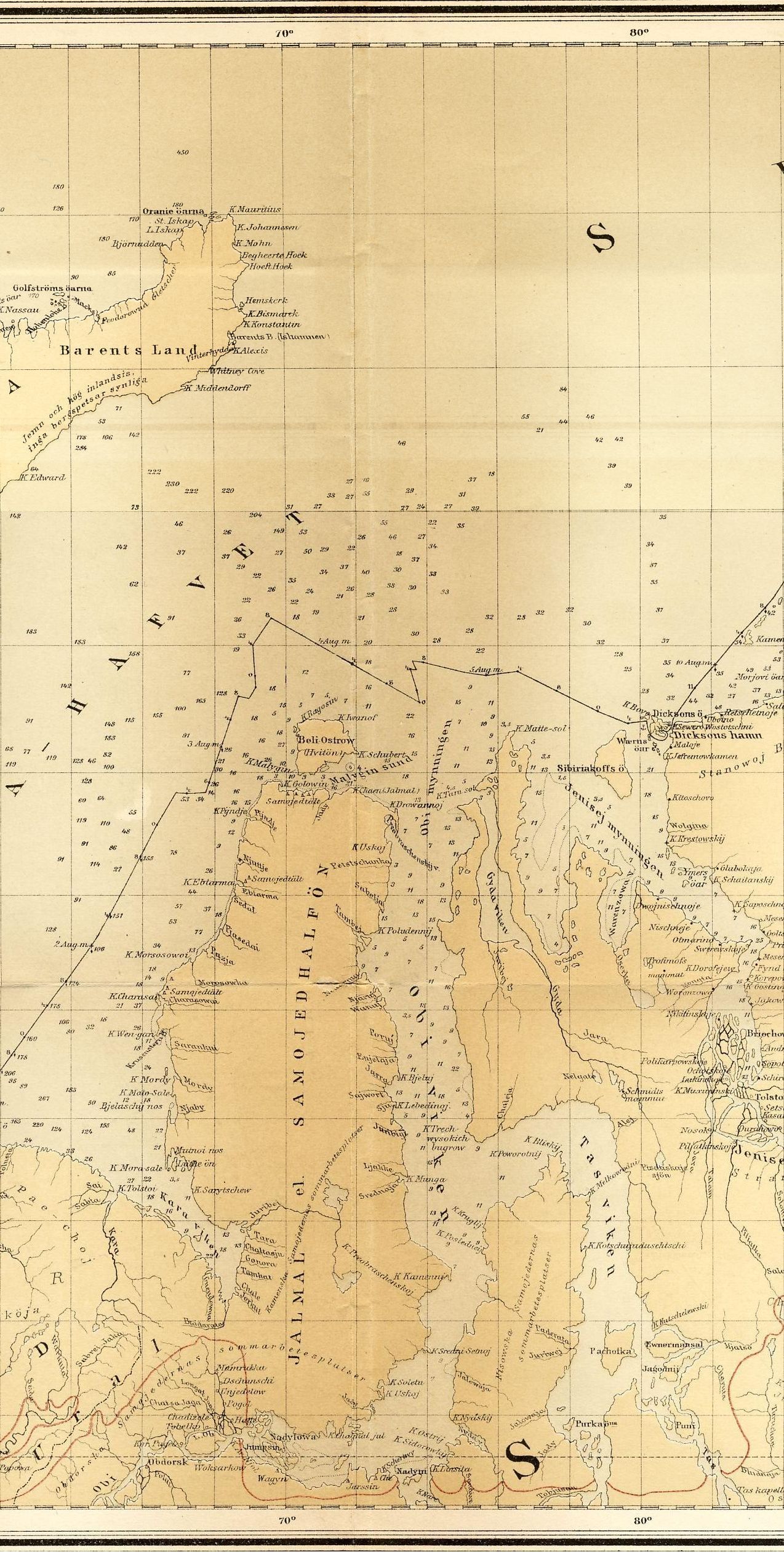
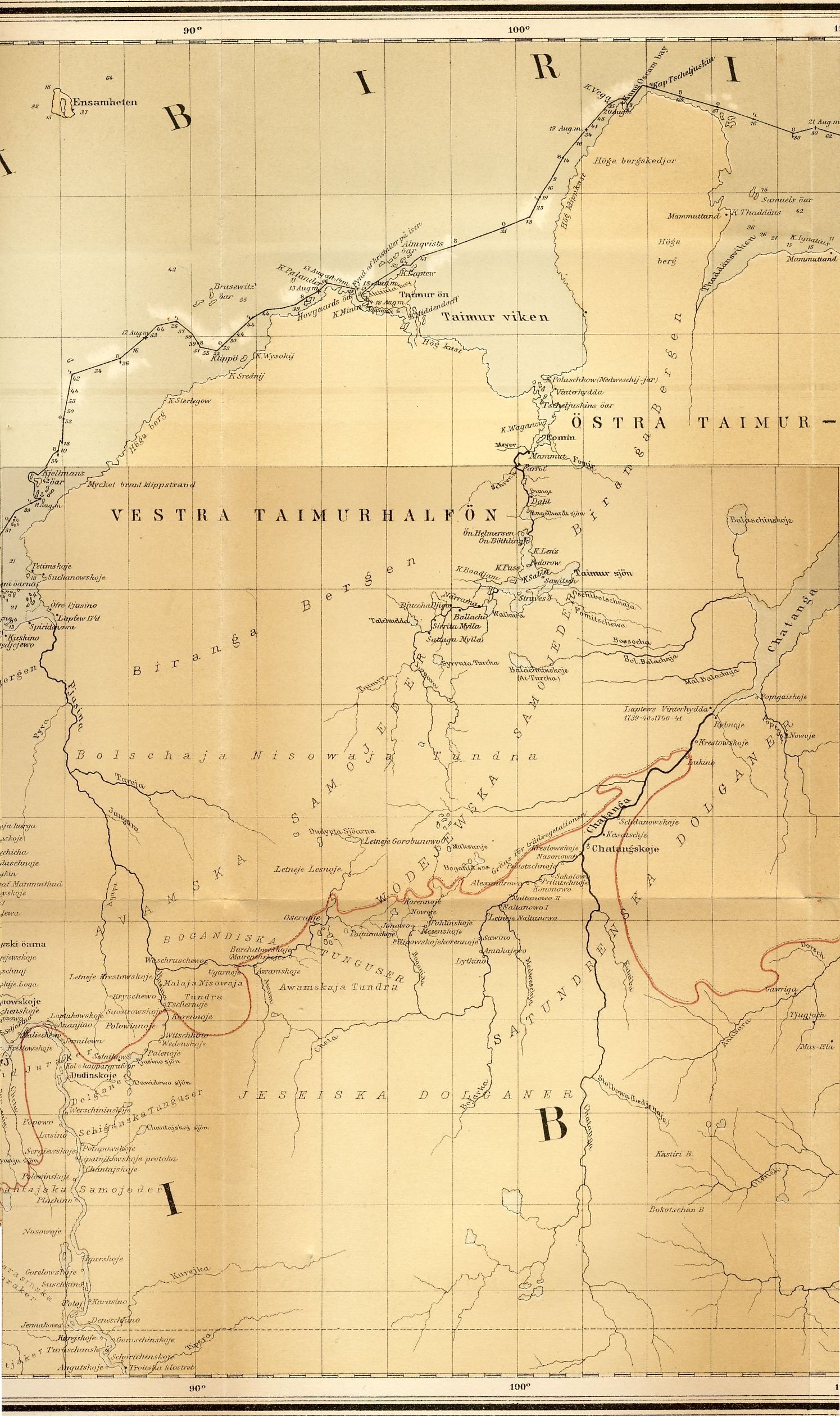
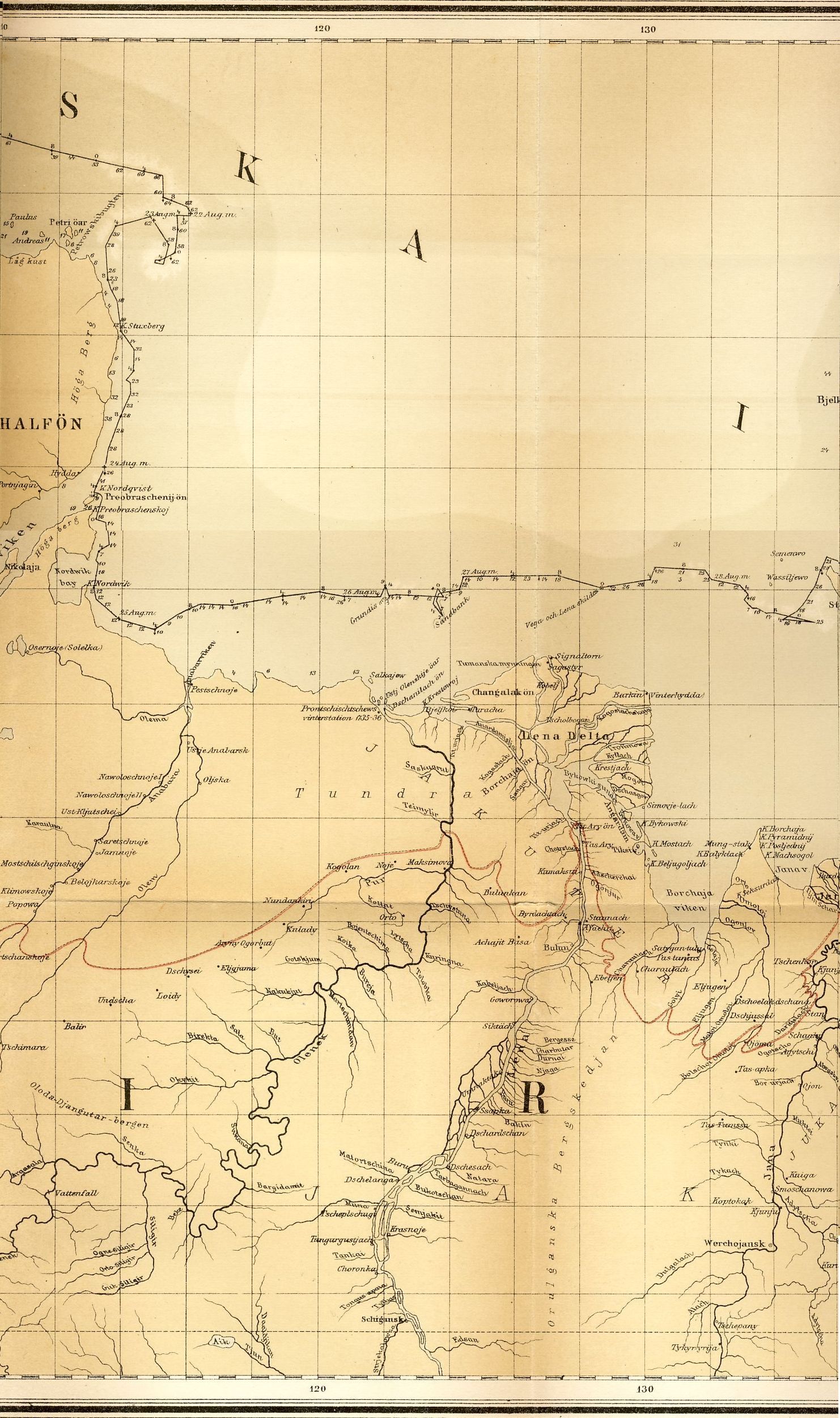
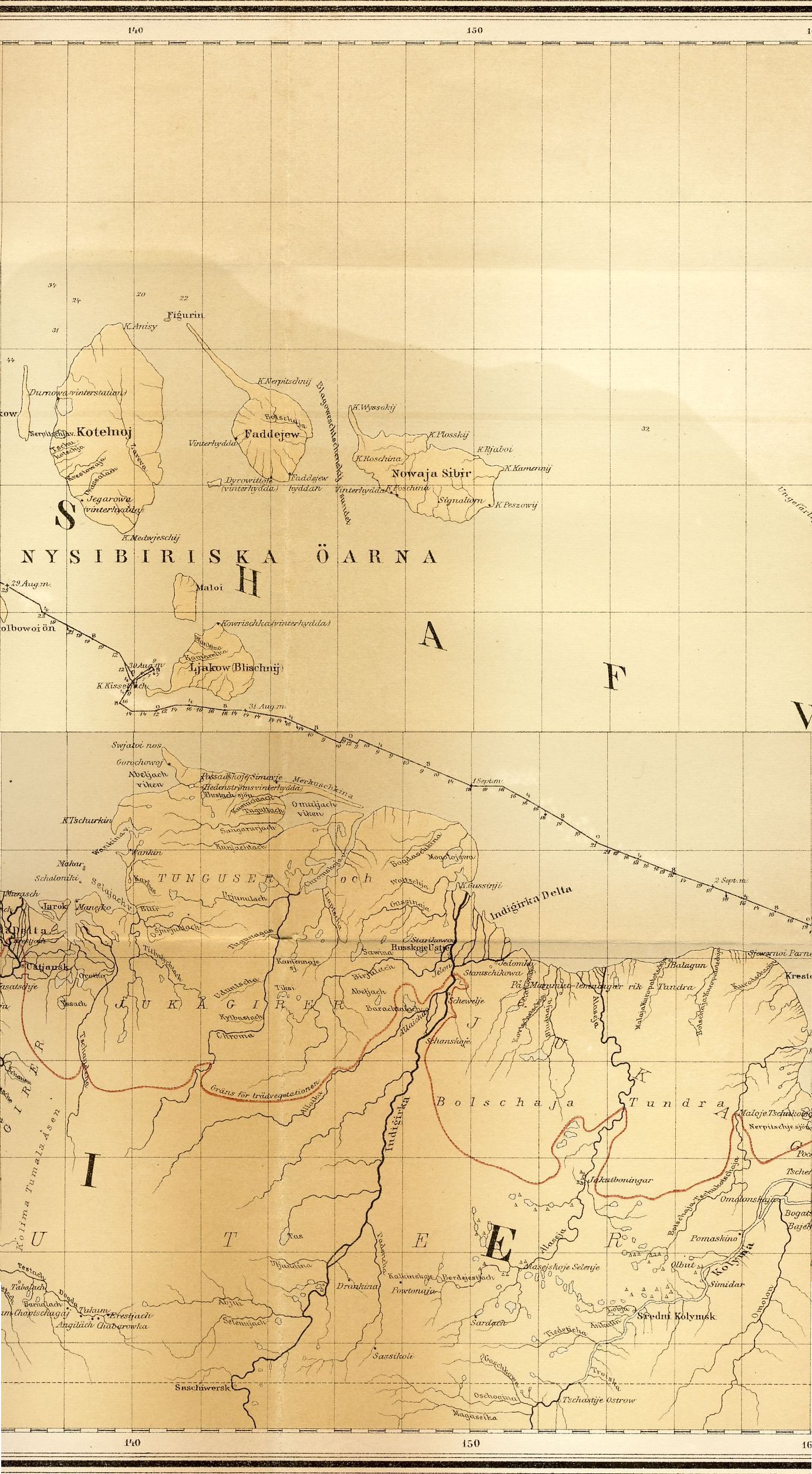
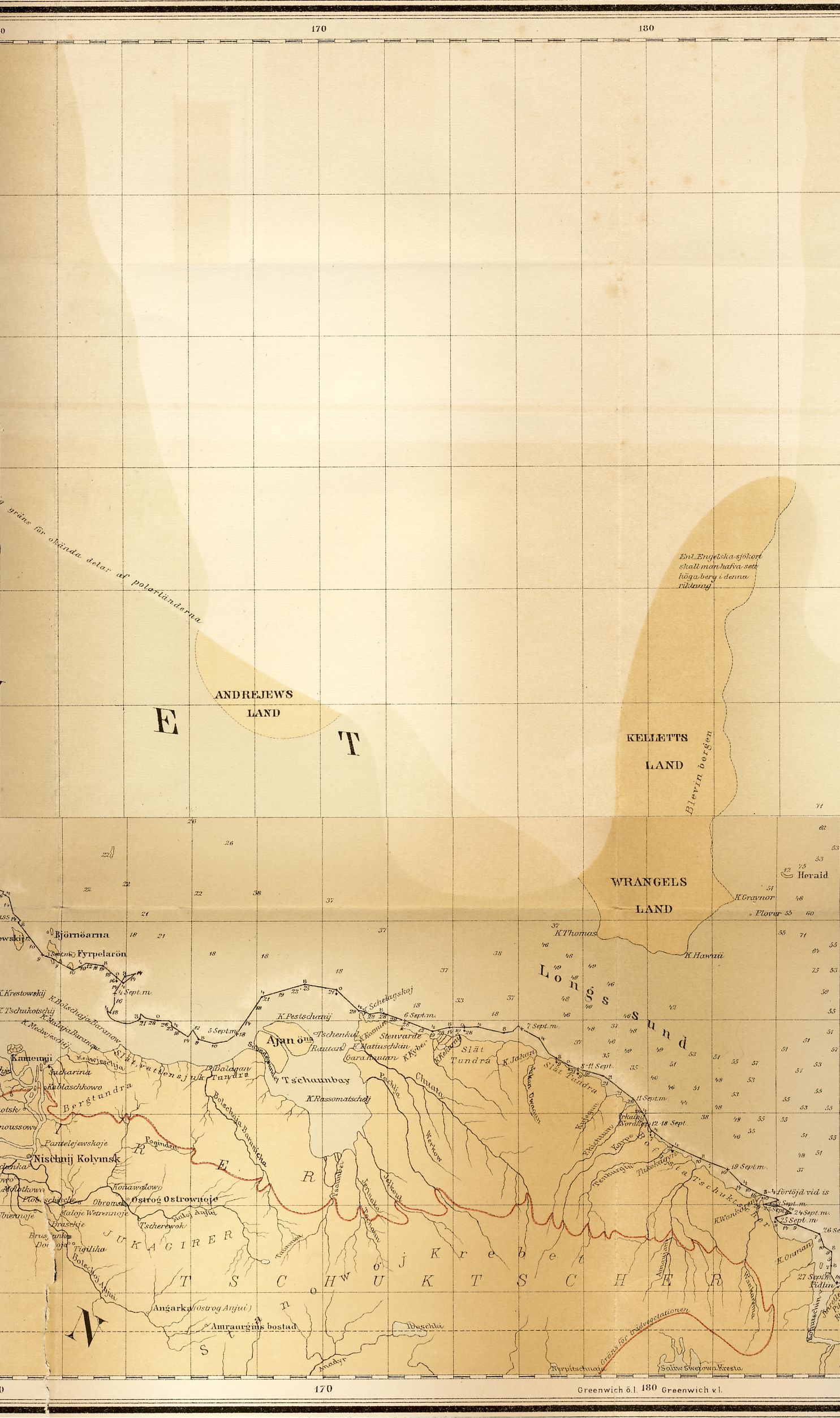
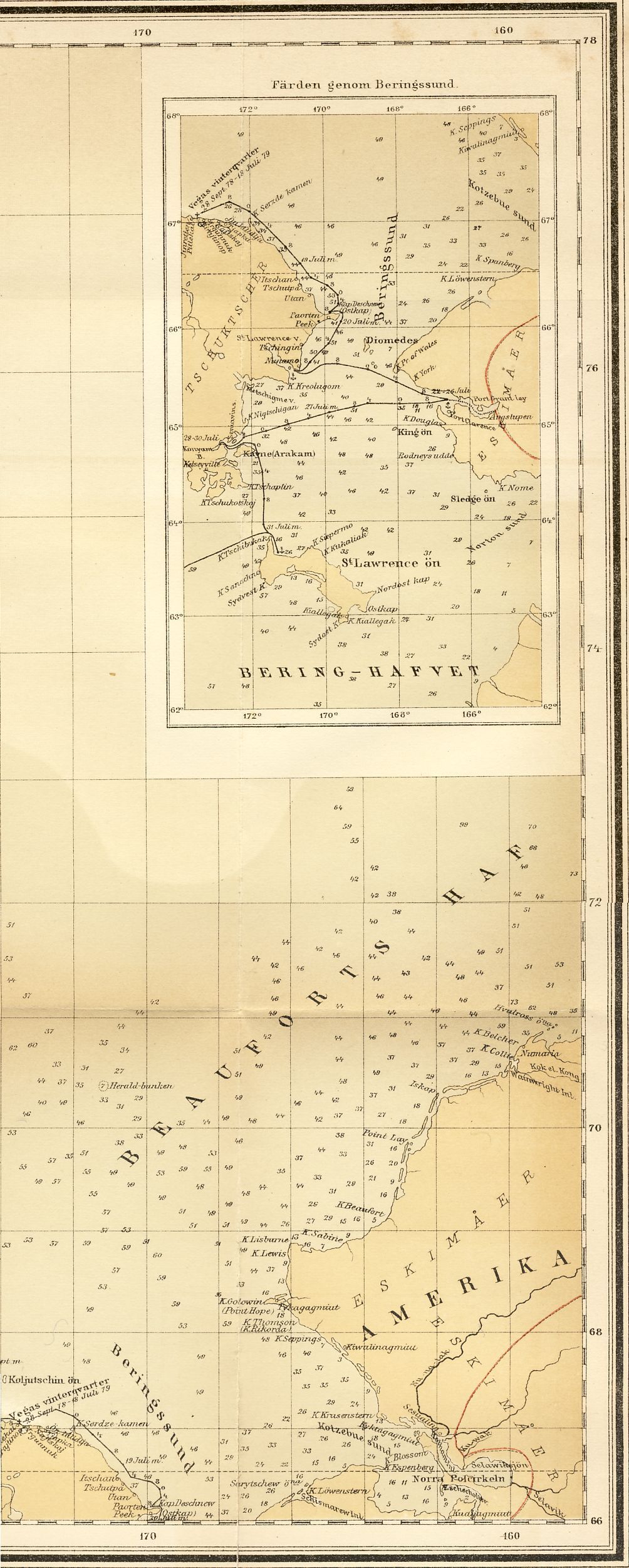
This map can be found in A.E.Nordenskiöld's travelogue "Vegas färd kring Asien och Europa", here scanned by Stefan Zenker and copied from his homepage. Click on the mapsections to enlarge.
Karta öfver Gamla Verldens nordkust från Norge till Beringssund, med Vega-expeditionens kurs, efter äldre och nyare källor samt under Vegas resa gjorda observationer, af N. SELANDER, kapten i Generalstaben (i två blad).
The Barque Vega's journey through the Northeast-passage
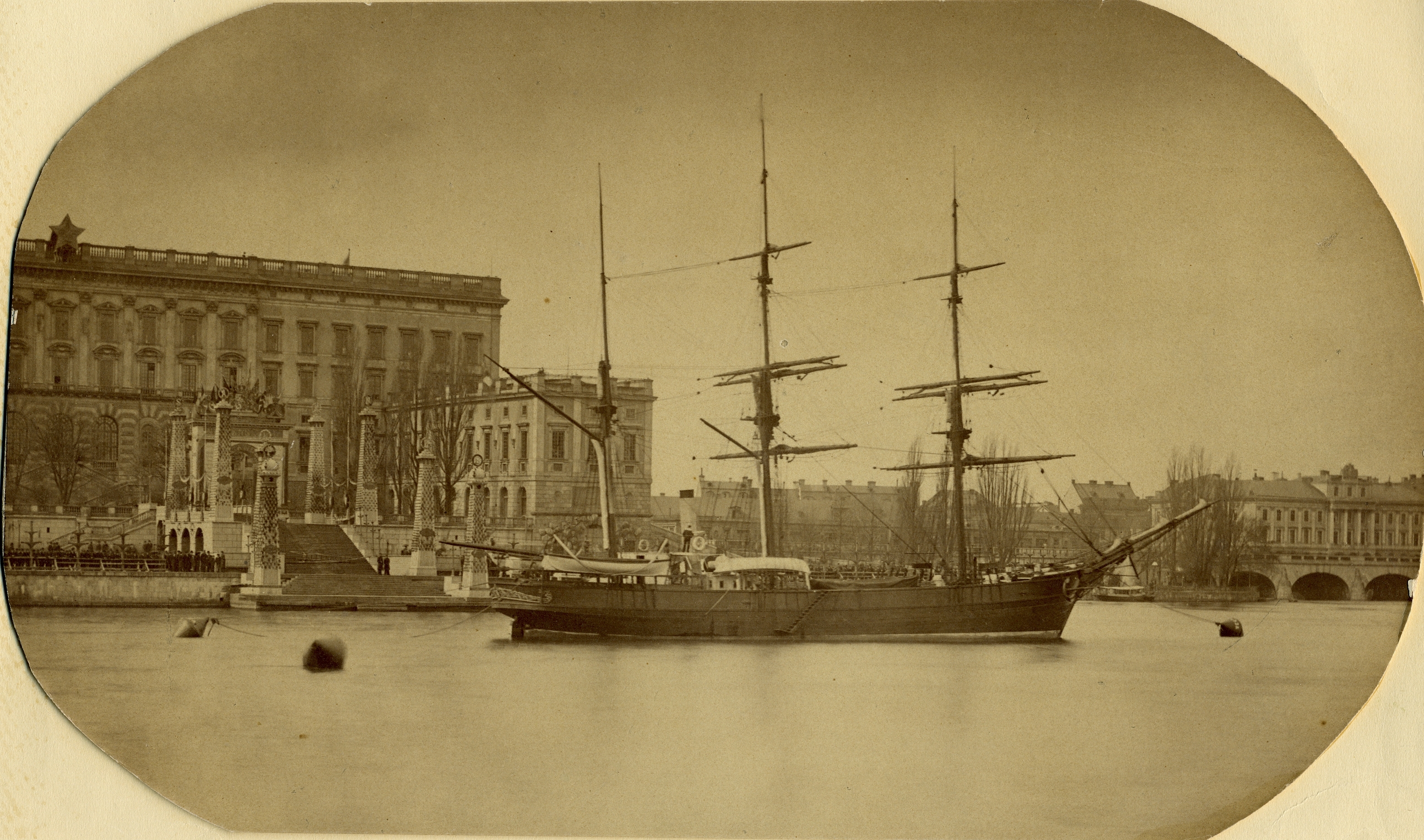
Vega utanför Kungliga slottet i Stockholm
In the year 1878 Adolf Erik Nordenskiöld and his crew on the Vega-ship headed out to do what nobody had succeeded in before – to sailk the whole way north of Asia, from the Atlantic to the Pacific The journey became an adventure of ice, cold and findings. When the ice closed tyhe way Vega got stuck fro ten moths at Pitlecay.
On board continued the measuring of sea and weather, the gathering of flora and fauna and learning to know the arctic people they met. The vessel was constructed for both sail- and steamengine-propulsion and to withstand the pressure of the pack ice. When Vega arrived home the expedition was honored one of the greatest scient9fic deeds in the 19th cnetury - and the beginning of a new era in the arctic exploration.
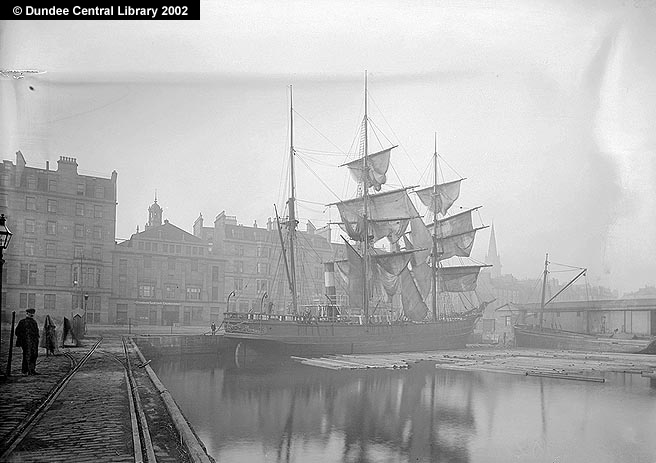
The last home harbour in Dundee, Scotland 1902 - photo A.Wilson
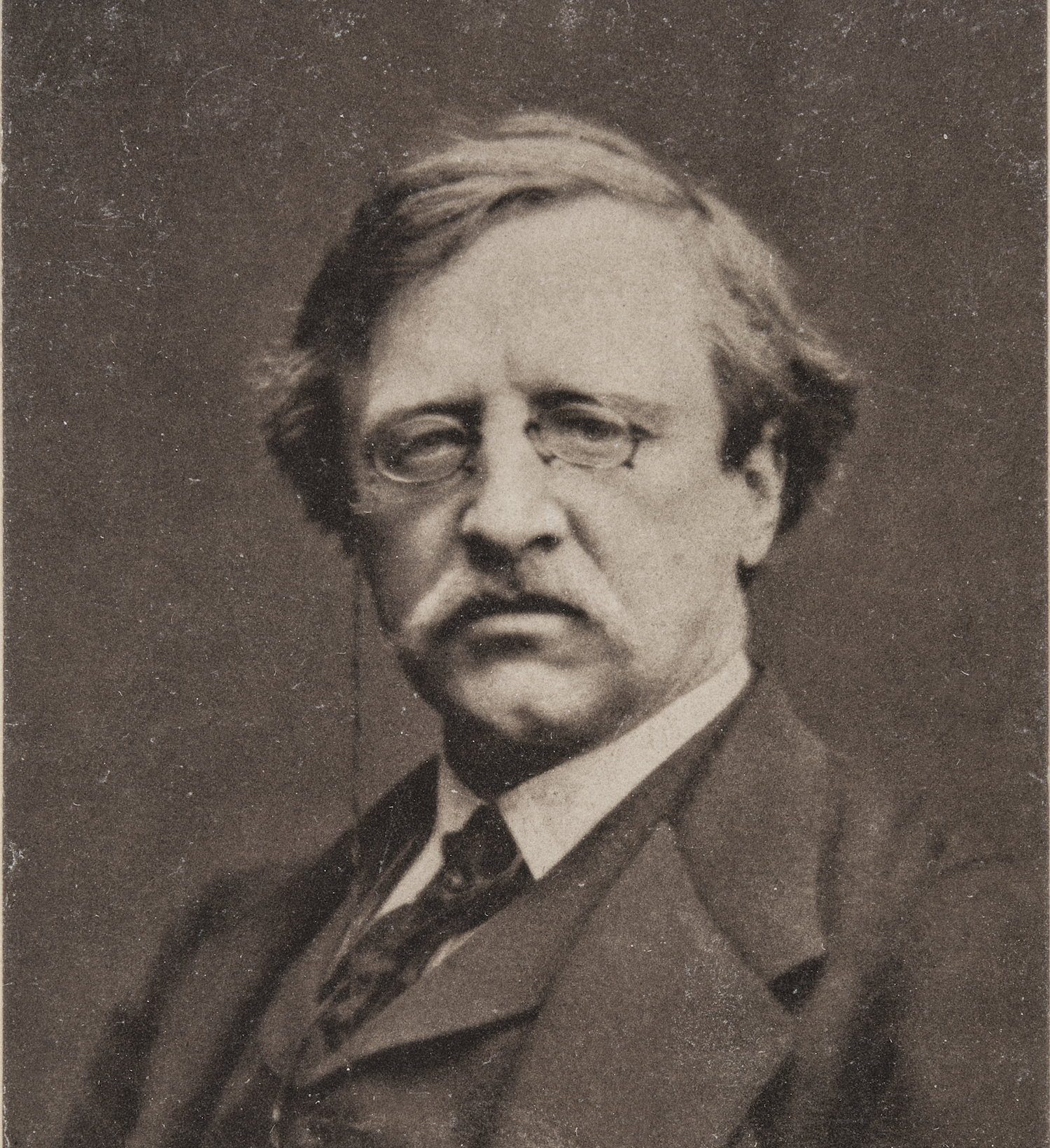
A.E. NORDENSKIÖLD
Nils Adolf Erik Nordenskiöld (18 November 1832 – 12 August 1901) was a Finland-Swedish aristocrat, geologist, mineralogist and Arctic explorer.[1] He was a member of the noble Nordenskiöld family of scientists and held the title of a friherre (baron). Born in the Grand Duchy of Finland in the Russian Empire, he was forced to move to Sweden in 1857 due to his political activity, where he became a member of the Parliament of Sweden and of the Swedish Academy. He led the Vega Expedition along the northern coast of Eurasia in 1878–1879. This was the first complete crossing of the Northeast Passage. Initially a troubled enterprise, the successful expedition is considered to be among the highest achievements in the history of Swedish science. On his return to Sweden he received an enthusiastic welcome, and in April 1880 was made a baron and a commander of the Order of the North Star.
In 1883, he visited the east coast of Greenland for the second time, and succeeded in taking his ship through the great ice barrier, a feat attempted in vain during more than three centuries.[5] The captain on the Vega expedition, Louis Palander, was made a nobleman at the same time, and took the name Palander af Vega.
In 1893, Nordenskiöld was elected to the 12th chair of the Swedish Academy.[1] In 1900 he received the Murchison Medal from the Geological Society of London.[10] He was nominated for the first Nobel Prize in Physics[11] but died before the prizes were awarded.
Nordenskiöld died on 12 August 1901, in Dalbyö, Södermanland, Sweden, at the age of 68.
(Source - Wikipedia)
Före sin legendariska Vega expedition företog Nordenskiöld vetenskapligt framgångsrika polarexpeditioner till Spetsbergen och Grönland.
Nordenskiöld and Japan
The Vega journey around the world developed into a voyage of contrasts. From the start in Tromsoe, by then a simple fishing village, through the harsh nature of Sibiria, icy winds and the primitive living of the local habitiants to the well organized societies of Japan. In te autumn 1879 Nordenskiöld met a Japan taht recently was opened to the worlds. He was deeply impressed by the order and beauty . and fascinated by the dinity of the women – lady like - as he expressed it. When he leftt Yokohama he brought japaneese books with him. With time he built the biggest private library about Japan and its culture.
From Nordenskiöld's "Vegas färd kring Asien"
"De förnämare qvinnorna äro ofta utmärkt vackra. I synnerhet hafva de vacker hals. Beklagligen vanställs de ofta af smink, för hvilket fruntimmren här tycks hafva stor förkärlek. De yngre qvinnornas drägt är, äfven hos de fattiga, vårdad, den är föga grann, men smakfull och nästan lika för; alla klasser. Deras sätt är mycket intagande och angenämt. Qvinnorna ur de förnämsta klasserna börja redan att deltaga i europeernas sällskapslif, och alla europeiska herrar och damer, med hvilka jag samtalat härom, öfverensstämma deri, att ingen svårighet finns för en japanska att lemna den inskränkta krets, till hvilken hon förut uteslutande varit hänvisad, och uppträda med behag och qvinlig värdighet i europeiska sällskap. Hon tycks vara född till 'lady'."
Ur Palander's Diary
Söndag den 26 oct 1879.
På frukost hos Buddinghouse och på aftonen hos Danska consulen (en norman vid namn Fleischer), han gjorde middagen på ett japanesiskt värdshus inrättat på Europeiskt vis. Under middagen passades vi upp af sångerskor, hvilka efter middagen gaf oss den vanliga japanska olåten till godo.
Puccini
A few decades later the same cultural meeting was told in a totally different way in Puccini's opera Madame Butterfly. Here the Naval officer Pinkerton is exploiting a young woman, he himself convinced about the superiority of the West.
These are two diversing stories about Japan - one characterized by curiousity, htoght and respect, the other by arrogance, and as a finally, in tragedy.
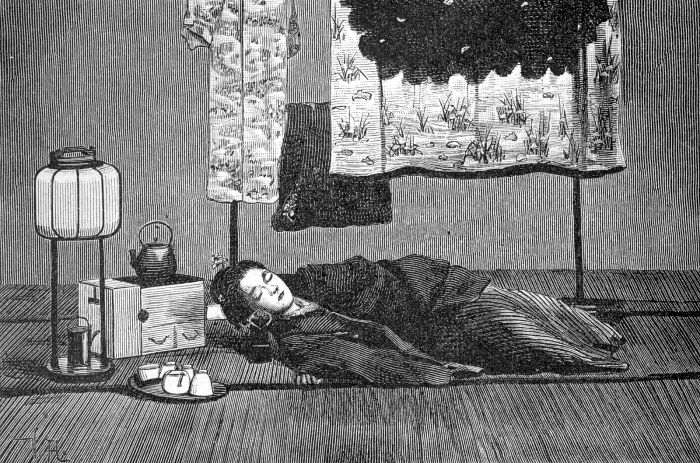
Japanskt sofrum


 Wintering in Sibiria